
Mug & Accessories
Ceramic vs Stainless Steel Mugs: Which Coffee Mug Is Better?
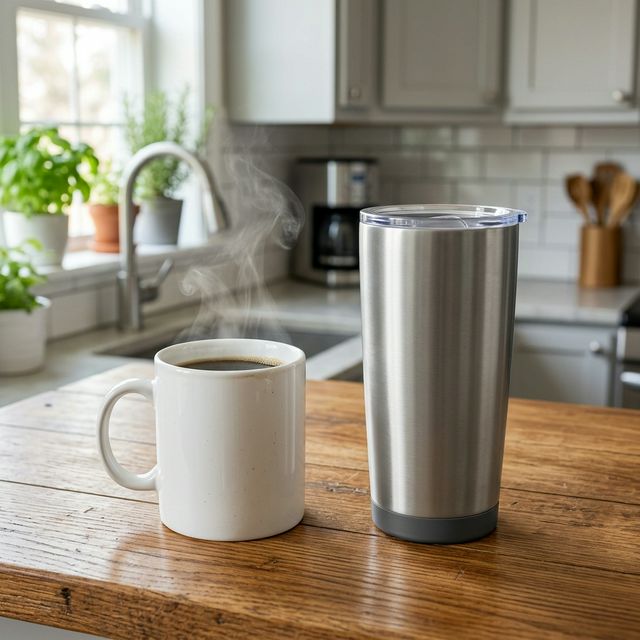
Mar
The Great Mug Debate: Ceramic Tradition vs Stainless Steel Innovation
Every coffee drinker eventually faces the same existential question: ceramic or stainless steel? It sounds trivial until you realize you’ll use this vessel 365 days a year, hold it during your most vulnerable pre-caffeine moments, and judge every cup of coffee by how it performs in your chosen mug.
The ceramic mug has been the default for centuries — classic, comforting, and sitting in every kitchen cabinet in America. But the stainless steel mug has charged onto the scene with promises of temperature control, durability, and the kind of rugged reliability that makes ceramic look fragile by comparison.
So which coffee mug is actually better? Let’s break down every factor — from heat retention to taste impact to environmental footprint — so you can make the choice that matches your life.
Quick Comparison Table
| Feature | Ceramic Mug | Stainless Steel Mug |
|---|---|---|
| Heat Retention | 20-30 minutes | 1-4 hours (insulated) |
| Taste Impact | Neutral — no flavor transfer | Minimal, but possible metallic notes |
| Durability | Breakable if dropped | Nearly indestructible |
| Weight | Heavier (12-16 oz empty) | Lighter (6-10 oz empty) |
| Price Range | $5-$30 | $15-$50 |
| Customization | Excellent — prints, colors, shapes | Limited — mostly solid colors |
| Microwave Safe | Usually yes | Never |
| Dishwasher Safe | Usually yes | Varies — check labels |
| Best For | Home, office, personalization | Travel, outdoors, long commutes |
Ceramic Mugs: The Classic Choice
Why People Love Ceramic
There’s a reason the ceramic coffee mug has dominated kitchens since the invention of hot beverages. It’s familiar, satisfying, and delivers a coffee experience that stainless steel simply can’t replicate. Here’s what makes it the original champion:
- Taste purity — ceramic is completely non-reactive, meaning your coffee tastes exactly as the roaster intended. No metallic notes, no chemical interference. Coffee purists and tea snobs universally prefer ceramic for this reason
- The warmth factor — the way a ceramic mug warms your hands on a cold morning is a sensory experience that insulated steel physically cannot provide. For many people, this IS the coffee experience
- Infinite personalization — from printed quotes to custom artwork to unique shapes, ceramic mugs offer unlimited design possibilities. Your personality, your humor, your identity — all expressible through ceramic
- Microwave friendly — reheating your forgotten coffee in under a minute instead of walking back to the coffee machine. A small convenience that ceramic owners take for granted until they switch
- Affordable variety — you can own a collection of personality-specific mugs for every mood, day of the week, or existential crisis, all for under $100
Where Ceramic Falls Short
- Fragile — one slip from counter height and it’s over. The heartbreak of losing a favorite mug is a universally understood trauma
- Poor portability — no spillproof lid, no insulation, and one pothole away from disaster in a moving car
- Temperature loss — your coffee goes from “perfect” to “room temperature disappointment” in about 20-30 minutes
- Staining — over time, ceramic interiors develop coffee and tea stains that require dedicated cleaning (baking soda + vinegar helps). Read our ceramic mug cleaning guide for solutions
Stainless Steel Mugs: The Modern Contender
Why People Love Stainless Steel
The stainless steel coffee mug — particularly vacuum-insulated options — has earned its place through engineering that solves the two biggest problems ceramic can’t: temperature and durability.
- Incredible heat retention — vacuum-insulated steel mugs keep coffee hot for 1-4 hours and cold drinks cold for 6-12 hours. Your 8 AM coffee is still warm at 10 AM — that’s revolutionary for slow sippers
- Near-indestructible — drop it, kick it, throw it in a backpack with your keys. It’ll dent at worst but never shatter. This is the mug equivalent of a Nokia phone
- Travel-ready — spillproof lids, one-hand operation, cupholder-friendly dimensions. Stainless steel mugs are built for life in motion
- Lightweight — despite being stronger, most stainless steel mugs weigh less than their ceramic counterparts thanks to thin-wall construction
- Eco-friendly reuse — replacing hundreds of disposable coffee cups per year with one reusable steel mug is a genuine environmental win
Where Stainless Steel Falls Short
- Taste concerns — some users report a faint metallic taste, especially with cheaper models. Quality brands with 18/8 food-grade stainless steel minimize this, but ceramic purists notice the difference
- Not microwave safe — metal + microwave = sparks and regret. You’ll need to reheat your coffee separately and transfer it, which defeats some of the convenience
- Limited personality — solid colors and laser-etched logos are about as creative as it gets. You can’t match the wild, expressive design range that ceramic offers
- Condensation and cleaning — narrow openings make thorough cleaning harder, and without regular maintenance, residual coffee can build up inside the lid mechanisms
- Cold hands — insulation works both ways. Your hands don’t feel the warmth of the coffee through the walls, which some people genuinely miss
Head-to-Head: Five Critical Comparisons
1. Taste Test: Ceramic Wins
If taste purity is your non-negotiable, ceramic wins decisively. The non-porous, glazed surface of quality ceramic has zero interaction with your coffee’s flavor profile. Stainless steel, while neutral in most cases, can occasionally impart a subtle metallic undertone — particularly noticeable with lighter roasts and delicate teas. For coffee snobs and tea purists, this alone ends the debate.
2. Temperature: Stainless Steel Wins
It’s not even close. A vacuum-insulated stainless steel mug keeps your drink hot for 3-5x longer than ceramic. For anyone who sips slowly, gets pulled into meetings, or simply forgets about their coffee for 45 minutes (we all do), stainless steel’s thermal superiority is genuinely life-changing. Your third sip shouldn’t be colder than your first.
3. Durability: Stainless Steel Wins
Ceramic mugs live in constant danger. Kitchen counters, office desks, clumsy morning hands — the threats are everywhere. Stainless steel is virtually unbreakable for daily use. It dents, sure, but it never shatters into pieces on your kitchen floor at 6 AM when you’re barefoot and the dog is trying to investigate. That scenario alone justifies the upgrade.
4. Design & Personality: Ceramic Wins
The ceramic mug is a canvas. Funny quotes, custom photos, fandom art, hand-painted glazes, unique shapes — the design possibilities are essentially infinite. Your personality finds expression through ceramic in ways that stainless steel simply can’t match. When your mug says something about who you are, it’s almost always ceramic.
5. Portability: Stainless Steel Wins
For homes and offices, ceramic is fine. For everything else — commutes, road trips, hiking, gym, airport — stainless steel dominates. Spillproof lids, cupholder dimensions, and the confidence that dropping it won’t create a cleanup situation make stainless steel the only logical choice for lives in motion.
Which One Should You Choose?
The answer depends on how and where you drink your coffee:
- Choose ceramic if: You drink coffee at home or at a desk, you value taste purity, you want personality and design options, you’re a creature of routine who enjoys the ritual of a favorite mug
- Choose stainless steel if: You’re always on the move, you need your coffee to stay hot for hours, you’ve broken too many ceramic mugs to count, you prioritize function over form
- Choose both if: You’re a normal human who has different coffee situations throughout the week. Ceramic for home, stainless steel for commute. This is the correct answer for most people — and the one mug manufacturers don’t want you to hear
Shop Your Perfect Mug at Q-Finder
Whether you’re team ceramic or team steel, Q-Finder has coffee mugs that match every preference, personality, and caffeine habit. From funny office mugs to motivational morning mugs and matching couple sets — every design is crafted with quality materials and printed in the USA.
👉 Shop Coffee Mugs at Q-Finder
Frequently Asked Questions
Does stainless steel change the taste of coffee?
High-quality 18/8 food-grade stainless steel has minimal impact on coffee taste. However, cheaper stainless steel or heavily scratched surfaces can impart a faint metallic note, particularly noticeable with lighter roasts. Ceramic remains the gold standard for taste purity. If you’re sensitive to flavor changes, invest in a premium stainless steel brand or stick with ceramic for your daily brew.
Are ceramic mugs better for the environment than stainless steel?
Both are more environmentally friendly than disposable cups. A reusable ceramic mug typically needs to be used 39-100 times to offset its production footprint, while a stainless steel mug needs 50-150 uses. Since both last years with proper care, the environmental difference is negligible. The biggest eco-impact is simply choosing reusable over disposable — regardless of material.
Can I put a stainless steel mug in the dishwasher?
Check the manufacturer’s instructions first. Many single-wall stainless steel mugs are dishwasher safe, but vacuum-insulated mugs often are not — the high heat and intense water pressure can compromise the vacuum seal over time, reducing insulation performance. For insulated mugs, hand washing with warm soapy water is the safest approach to maintain both hygiene and thermal performance.
