
Style & Tips
Does Hanging Clothes Remove Wrinkles? When It Works and When It Fails
Oct
Does Hanging Clothes Remove Wrinkles? When It Works and When It Fails
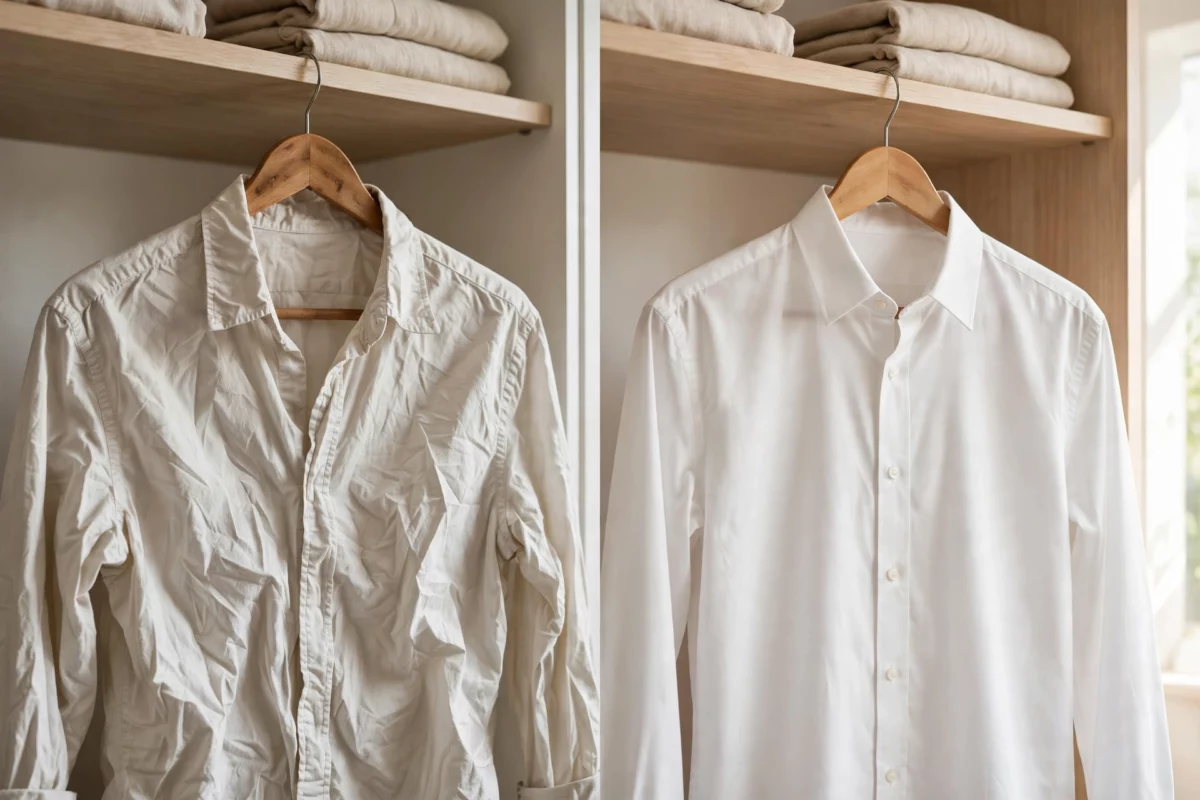
Hang a freshly washed shirt on a hanger and it dries smooth. Hang a bone-dry, creased shirt in your closet overnight and it comes out looking exactly the same. So does hanging clothes remove wrinkles — or not? The honest answer: hanging prevents wrinkles and relaxes light ones, but it cannot erase deep, set-in creases on its own. Once you understand when hanging works and when it fails, you can stop wasting overnight hangs and start getting actually smooth clothes.
Why Hanging Works at All: Gravity Plus Moisture
Wrinkles form when fabric fibers bend and lock into place. Cotton and linen fibers are held together by hydrogen bonds; when the fabric gets damp, those bonds loosen, and as the fabric dries under the gentle pull of gravity, the fibers settle into a straighter arrangement. That is the entire mechanism: moisture relaxes the fibers, gravity pulls them straight, and the fabric dries in that smoother shape.
This is why laundry experts consistently recommend shaking each garment out of the washing machine and hanging it right away. As consumer analyst Laura Johnson of LG’s research lab has noted, hanging shirts and pants prevents wrinkles, especially compared with stacking or imperfect folding — but the hanger matters too. It is also why pros say wrinkles can typically be worked out with a firm shake or hand-smoothing before hanging, while stubborn creases still need a steamer afterward.
When Hanging Actually Removes Wrinkles
1. Right out of the washer
This is hanging’s greatest victory. A shirt removed promptly from the machine, shaken firmly, smoothed by hand, and hung on a proper hanger will often dry nearly wrinkle-free — especially cotton-poly blends and synthetics. The golden rule: never let damp clothes sit crumpled in the machine. Every minute they spend bunched up is a minute wrinkles are setting in.
2. Light travel and storage wrinkles, given time
Unpack at the hotel and hang everything immediately. Light surface wrinkles — the kind from an hour in a garment bag or a day in a drawer — will noticeably relax after several hours on a hanger, and often disappear overnight. This is the same principle behind the popular advice to hang clothes in a steamy bathroom: moisture plus gravity does the work for you. (Our shower steam method guide supercharges this exact effect.)
3. The damp-hang trick
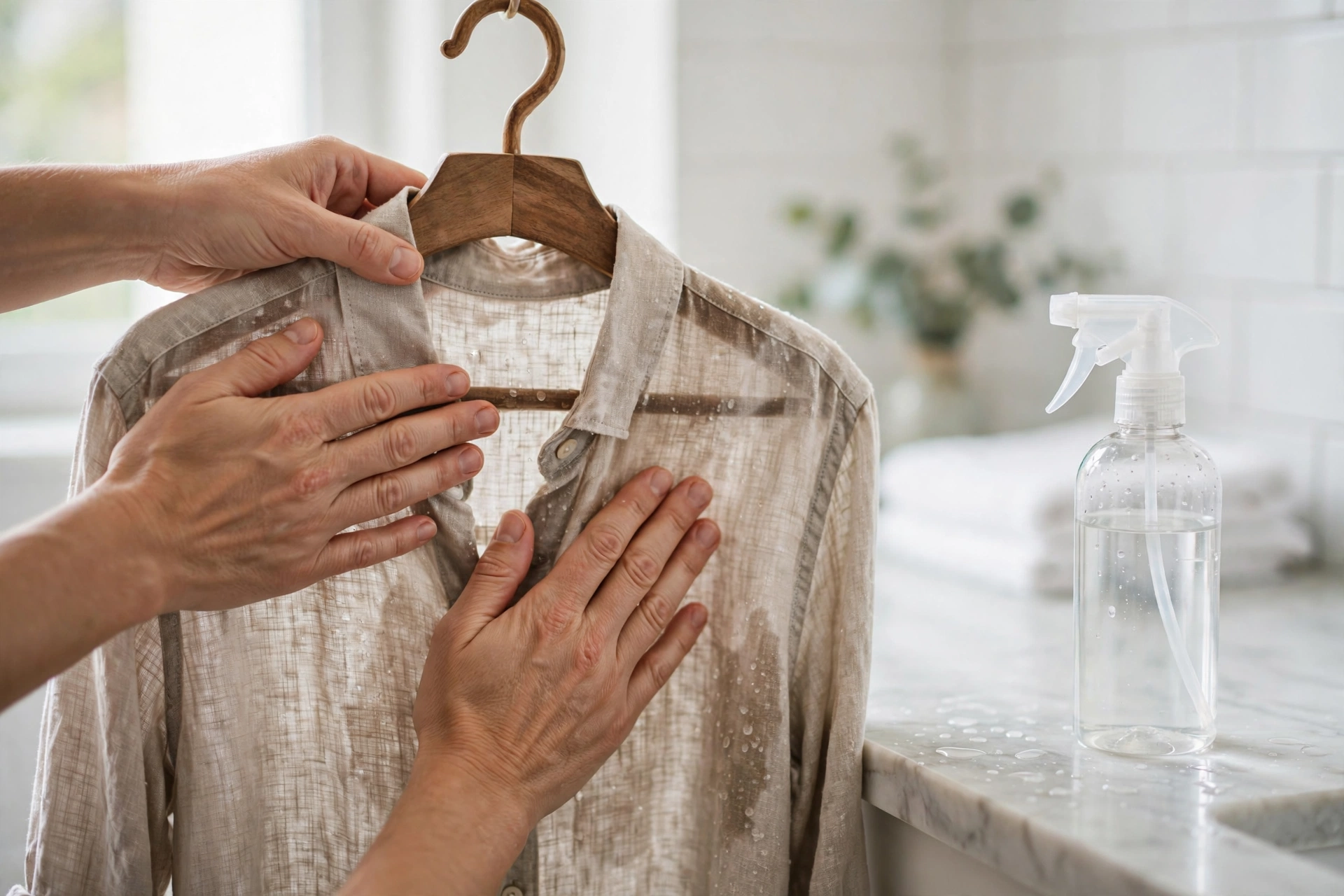
For a garment that is already dry but lightly wrinkled, lightly mist the wrinkled areas with water from a spray bottle until barely damp, smooth the fabric with your palms, pull the hem gently downward, and hang it in a well-ventilated spot. As the water evaporates, minor wrinkles relax on their own — particularly in cotton, polyester, and blends. No iron, no steamer, no products required.
4. Prevention beats cure — hanging vs. folding
Hanging is primarily a prevention strategy. Folding a garment presses crease lines into it under the weight of the stack; hanging maintains the garment’s natural shape with nothing pressing against it. For dress shirts, blouses, and trousers, hanging instead of folding means you start every morning from smooth instead of creased.
5. Combined with a wrinkle-release spray
A light mist of commercial wrinkle-release spray (or a homemade mix of water with a splash of white vinegar and a drop of fabric softener), followed by hand-smoothing and hanging, handles moderate wrinkles that plain hanging would leave behind.
When Hanging Fails — and What to Do Instead
1. Bone-dry, set-in creases
This is the big one. A crease that has been pressed into dry fabric — the fold line across a shirt that sat folded for weeks, or the deep wrinkles in linen pants after a day of sitting — will not release from gravity alone. Without moisture (or heat) to loosen the fiber bonds, nothing changes. For these, you need the dryer steam trick, a steamer, or an iron.
2. Linen and stiff cotton
Linen is notorious: it wrinkles the moment you look at it and holds every fold. Natural fibers without elasticity (100% cotton, linen, silk) are the least forgiving. Hanging helps linen less than any other fabric — expect a steamer to remain mandatory for linen outfits.
3. The wrong hanger makes things worse
Thin wire hangers are the enemy: they concentrate the garment’s weight on two narrow points, which can stretch shoulders, create “shoulder bumps” on knit tees, and even press new crease lines into the fabric. Delicate items slip off; heavy wet items distort. Use sturdy wooden, velvet, or padded hangers matched to the garment, button dress shirts before hanging, and leave space between hangers so nothing gets crushed.
4. Heavy knits and sweaters
Never hang a heavy wet sweater or knit — gravity becomes the villain, stretching it into a sad, elongated shape. Knits and anything the care label says to “lay flat” should dry flat, always.
5. The overcrowded closet
Cramming clothes shoulder-to-shoulder undoes every benefit of hanging. Clothes need air circulation to dry and room so they are not pressed against each other. If your closet is packed tight, hanging is barely better than folding.
The Right Way to Hang Clothes for Wrinkle Removal
- Act fast: remove clothes the moment the wash cycle ends. Shake each garment firmly to release twist and surface wrinkles.
- Smooth by hand: lay the garment flat for a moment, press the worst wrinkles out with your palms, straighten collars, plackets, and hems.
- Choose the right hanger: wooden or thick contoured hangers for shirts and jackets, velvet no-slip hangers for delicates, clamp hangers for pants (clamps virtually eliminate fold creases).
- Button up: button at least the top button of dress shirts before hanging — it holds the collar and placket in shape and prevents stretching.
- Give it air: hang in a ventilated spot with space between garments. A breeze or gentle airflow dramatically speeds wrinkle release.
- Mist if needed: for dry garments with light wrinkles, a fine water mist before hanging bridges the gap between “works” and “fails.”
FAQ
Can I use a wire hanger to remove wrinkles?
Wire hangers are the worst choice: they misshape shoulders, leave pressure marks, and can rust. They do not help wrinkles and often add new ones. Switch to wooden, velvet, or padded hangers.
How long does it take for hanging to remove wrinkles?
Damp-from-the-washer garments: as long as they take to dry (a few hours). Light dry wrinkles with a water mist: 1–3 hours in ventilated air. Overnight hangs work well for travel wrinkles. Set-in creases: hanging alone will not fix them no matter how long you wait.
Does hanging remove wrinkles from linen?
Barely. Linen relaxes slightly on a hanger, but its deep creases need steam — try the shower-steam method or a handheld steamer. Accept that linen will always have some character; that is part of its look.
Is it better to hang or fold wrinkle-prone clothes?
Hang. Folding presses creases in under the stack’s weight, and the longer items stay folded, the more permanent the lines become — especially in cotton and linen. For wrinkle-prone fabrics, hanging is almost always the better option.
The Bottom Line
Hanging clothes removes wrinkles when moisture and gravity get to work together — straight from the washer, lightly misted, or left overnight for mild creases. It fails on dry, set-in creases and wrinkle-prone natural fibers like linen, where you need steam or heat. Treat hanging as your first line of defense and prevention, keep proper hangers on hand, and reach for the steamer when gravity alone is not enough.
