
Style & Tips
How to Pack Shirts in a Suitcase Without Getting Wrinkles: Pro Travel Guide
Oct
Packing a suitcase without turning your shirts into crumpled rags is a skill every traveler needs. Here’s the short answer: roll casual T-shirts and polos, flat-fold dress shirts with tissue paper or dry-cleaner bags between layers, and bundle-wrap suits and blazers around a soft core. Load heavy items at the bottom, keep delicate shirts on top, and unpack or hang everything as soon as you arrive. Do this, and your clothes come out ready to wear — no iron required.
Below is the full pro method, step by step, covering every shirt type in your bag — from gym tees to crisp office dress shirts.

Why Do Shirts Get So Wrinkled in a Suitcase?
Wrinkles form when fabric is pressed into sharp folds under weight and held there over time. In a suitcase, three things conspire against you:
- Pressure: heavy items stacked on top crush folded shirts into hard creases.
- Friction: shirts rubbing against each other or against the suitcase lining roughen the surface and set wrinkles in place.
- Time: the longer a fold sits under pressure — on a long flight or multi-day trip — the deeper the crease becomes.
Fabric matters too. Cotton dress shirts wrinkle the most; knits like T-shirts bounce back more easily; synthetics like polyester and nylon barely wrinkle at all. Knowing this helps you choose both what to pack and how to pack it.
1. The Rolling Method: Best for T-Shirts, Polos and Casual Tops
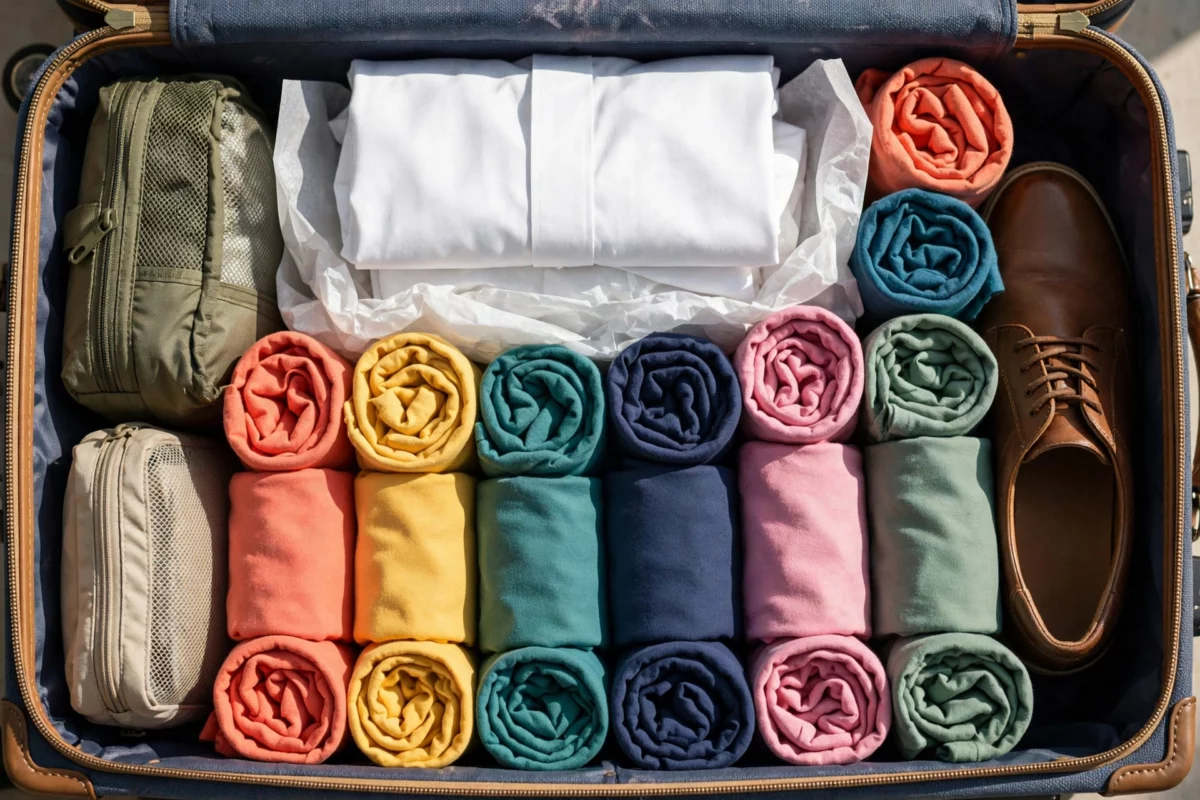
Rolling is the travel classic for a reason: it creates no hard fold lines, saves space, and keeps knit fabrics smooth. Travel organizers consistently rank it the top method for casual wear.
How to roll a T-shirt:
- Lay the shirt face down on a flat surface and smooth out any existing wrinkles with your hands.
- Fold the sleeves inward toward the center so the shirt forms a long rectangle.
- Starting from the bottom hem, roll the shirt tightly upward toward the collar.
- Place the roll in your suitcase snugly so it can’t shift or unroll in transit.
Rolling works beautifully for T-shirts, polo shirts, knit tops and activewear. One caution: it doesn’t suit stiff or delicate fabrics — silk, linen and structured dress shirts crease worse when rolled, so use the flat-fold methods below for those.

2. The Flat Square Fold: Best for Dress Shirts
For button-down and dress shirts, precise flat folding beats rolling. The goal is wide, smooth folds instead of sharp ones.
- Button the shirt all the way up — this keeps it from shifting.
- Lay it face down on a flat surface and smooth it flat with your hands.
- Fold each sleeve straight back along the sides, then fold the shirt in half lengthwise.
- Fold it into thirds (the “square fold”): bring the bottom third up, then fold the top third down over it.
- Slide a sheet of tissue paper or a dry-cleaner bag between folded layers to cut friction.
Fold smarter shirts along their seams and never crease across the collar or button placket. Pack folded dress shirts on top of your rolled clothes, never underneath heavy items.
3. Bundle Wrapping: Best for Suits, Blazers and Structured Shirts
Bundle wrapping (also called the “bundle method”) distributes pressure evenly so no single fold line bears weight. Professional organizers recommend it for formalwear.
- Start with a soft core — a toiletry bag or packing cube works well.
- Wrap your most wrinkle-resistant casual pieces around the core first.
- Place structured or delicate items — dress shirts, blazers — as the outer layers, sleeves tucked and fabric smooth.
- Keep everything taut but not stretched as you wrap layer over layer.
When you unwrap at the hotel, the outer dress shirts emerge nearly crease-free because pressure was spread across the whole bundle instead of concentrated on sharp folds.
4. Use Tissue Paper and Dry-Cleaner Bags
This is the pro trick most casual packers skip. Sliding tissue paper between folded layers, or slipping each garment into a thin plastic dry-cleaner bag, reduces friction — and friction is what locks wrinkles in. Dry-cleaner bags are especially effective for wrinkle-prone suits, blouses and dress shirts: stack each bagged garment in the suitcase and they’ll slide instead of grinding against each other.
Don’t overstuff. Even with tissue and bags, cramming too much into the case forces creases regardless of technique.
5. Load the Suitcase in the Right Order
Packing order matters as much as folding technique:
- Bottom (by the wheels): heavy items — jeans, sweaters, shoes (stuff socks and underwear inside shoes to save space).
- Middle: rolled casual clothes — T-shirts, polos, knit tops. These form a cushiony layer.
- Top: folded dress shirts, blouses and delicate items, cushioned by everything below.
A suitcase your clothes fill snugly — without being squished — wrinkles less than a half-empty one where garments shift around, or an overstuffed one where everything is crushed.
6. What to Do When You Arrive
Even perfect packing benefits from a good arrival routine:
- Unpack immediately. The longer clothes sit folded, the deeper creases set. Hang delicate shirts right away.
- Hang shirts in a steamy bathroom while you take a hot shower — the steam relaxes most remaining wrinkles. (We’ve tested this method in detail — see our guide on de-wrinkling shirts with shower steam while traveling.)
- Use the dryer trick: 10–15 minutes in the dryer with a damp towel smooths out stubborn transit creases.
- Dampen and smooth: lightly mist remaining wrinkles with water, smooth the fabric flat with your hands, and hang to dry.
FAQ: Packing Shirts Without Wrinkles
Should I roll or fold dress shirts?
Fold them — never roll dress shirts. Rolling creates rounded pressure that sets awkward creases into stiff cotton. Use the flat square fold with tissue paper between layers, or bundle-wrap them as outer layers.
Do packing cubes prevent wrinkles?
Packing cubes organize well but don’t prevent wrinkles by themselves — the folding or rolling technique inside the cube is what matters. Cubes do help by keeping folded stacks compressed and snug so they don’t shift.
Which shirt fabrics wrinkle the least when traveling?
Synthetics (polyester, nylon) and performance blends barely wrinkle and are ideal travel shirts. Cotton-poly blends outperform 100% cotton. Pure cotton and linen wrinkle the most — flat-fold them with tissue or dry-cleaner bags.
Is it better to wear my bulkiest shirt on the plane?
Yes — wearing your heaviest or most wrinkle-prone item (like a blazer or heavy flannel) frees suitcase space and spares it from being crushed under other clothes.
The Bottom Line
Wrinkle-free travel packing isn’t luck — it’s method. Roll your knits, square-fold your dress shirts with tissue between layers, bundle-wrap anything structured, load heavy-to-light, and unpack the moment you arrive. Master these five habits and you’ll step off every trip looking like you just left your own closet.
