
Design Meanings
What the Edmund Fitzgerald Shirt Really Means: Memorial, Music, and Great Lakes Identity
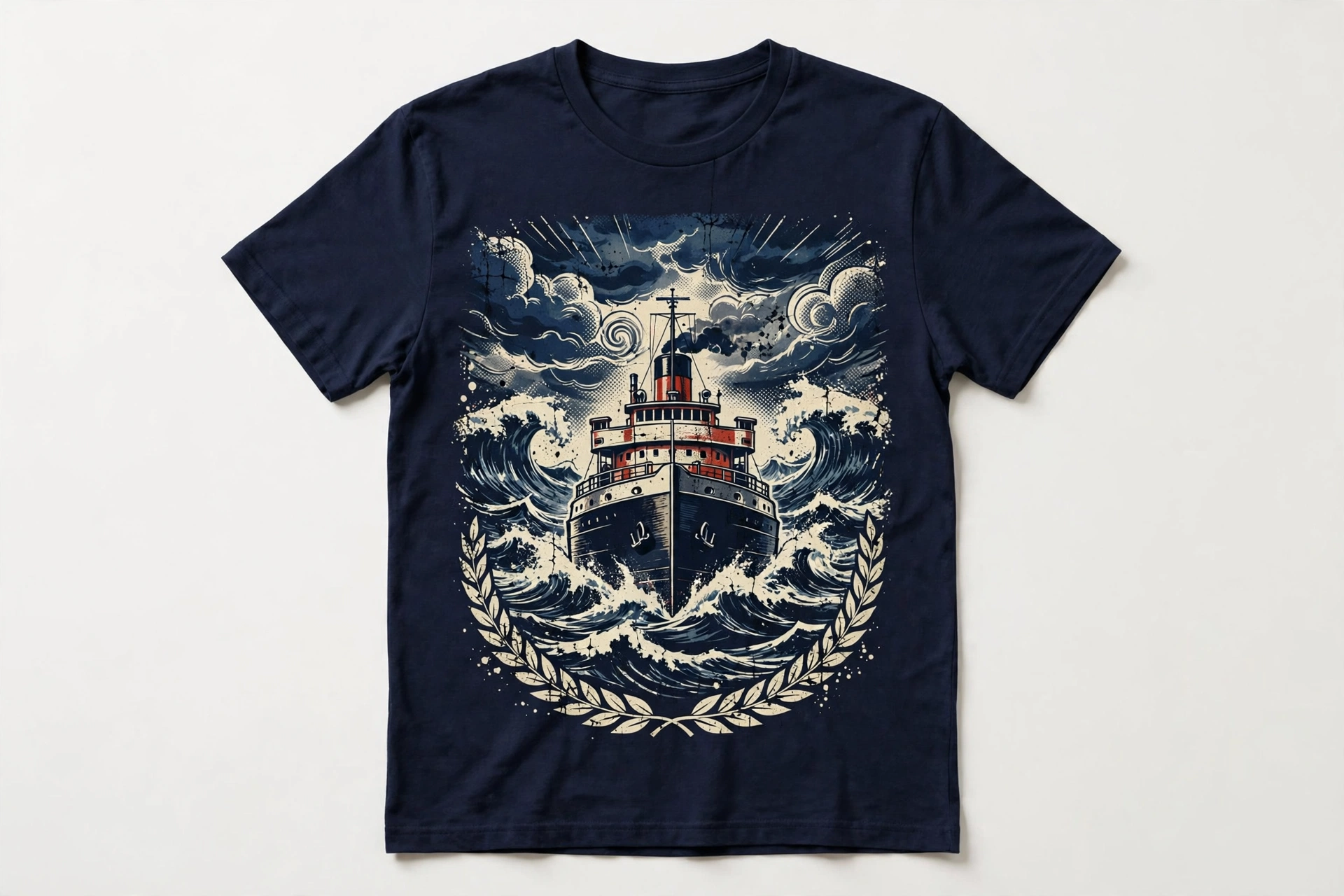
You’ve seen the shirt before you knew the story. A weathered freighter plowing through slate-gray waves, red-white-and-blue ink faded like an old album cover, maybe with the words “This Old Boat Is Taking Water” or “November 10, 1975” underneath. It looks like classic vintage Americana — but the Edmund Fitzgerald shirt meaning runs deeper than most graphic tees ever go. It is, at once, a memorial, a tribute to one of the most haunting folk songs ever recorded, and a badge of Great Lakes identity.
So was the Edmund Fitzgerald real? Yes. And what does the shirt symbolize? The answer comes in three layers.
The Ship: A Real Freighter and a Real Tragedy
The SS Edmund Fitzgerald was an American Great Lakes freighter launched on June 7, 1958. At 729 feet she was the largest ship on the Great Lakes then, and for 17 years she hauled taconite iron-ore pellets — the raw material of the Midwest’s steel industry.
On the evening of November 10, 1975, she was crossing Lake Superior in a brutal autumn storm — near hurricane-force winds, waves around 35 feet — when she vanished from radar near Whitefish Bay. No distress signal was ever received. All 29 crew members were lost. The wreck rests about 530 feet deep, broken in two; the ship’s bell was recovered in 1995 and now sits at the Great Lakes Shipwreck Museum.
That is the first and most important layer of the shirt’s meaning: remembrance. Twenty-nine mariners never came home, and for the communities around the lakes — Duluth, the Soo, Whitefish Point — the Fitzgerald isn’t a legend. It’s a family story. Many of the most popular designs carry the date or the line “the lake it is said never gives up her dead” precisely because wearing one is a quiet act of memorial.
The Song: How Gordon Lightfoot Made It a Legend
The second layer belongs to music. In 1976, Gordon Lightfoot released “The Wreck of the Edmund Fitzgerald,” a six-minute folk ballad retelling the night of the sinking in plain verse. The song made the Fitzgerald a piece of shared North American culture — and it’s why the shirt resonates even with people who’ve never set foot on Lake Superior. Plenty of designs quote the lyrics or use the phrasing “The Wreck of the Edmund Fitzgerald,” making the garment a tribute to Lightfoot’s storytelling as much as to the ship itself.
The Third Layer: Great Lakes Regional Identity
Here’s the layer most people miss. The Fitzgerald is to the Great Lakes what the Alamo is to Texas — a shared story that says this is where I’m from.
The people who wear a great lakes freighter shirt aren’t necessarily maritime-history buffs. They’re Duluth locals, Upper Peninsula transplants, sailors, steelworkers, and cottage-country families. The distressed-vintage look of most designs — faded red, white, and blue, the freighter silhouetted against heavy seas — taps directly into blue-collar, working-waterfront nostalgia. It reads less like a concert tee and more like a heritage garment, something from a lighthouse gift shop or harbor-town general store.
That’s also why the design works so well on apparel. It’s specific enough to mean something, but the visual language — storm, ship, old lettering — is broadly readable. You don’t need the backstory to appreciate the look; the backstory just makes the shirt mean more once you learn it.
Why the Design Is Surging Right Now
Searches for the design climb every late October, and the reason is the calendar. November 10 is the anniversary of the sinking, and regional news outlets cover the annual memorials as the date approaches.
This year the coverage has been especially active. Split Rock Lighthouse, run by the Minnesota Historical Society, announced its 2026 annual memorial on October 13: on November 10 the names of the 29 crew members will be read to a ship’s bell while the beacon is lit. The Cleo Redd Fisher Museum in Loudonville, Ohio held a speaker program, “What Really Happened?”, on October 19. And an October 21 article re-circulated the story of the 1994 submersible expedition that found a body at the wreck site. Add residual momentum from the 50th anniversary on November 10, 2025, and you have the full picture behind the current trend: not a new product drop or a viral meme, but remembrance doing what it does every year — drawing people back to the story, and then to the shirt that tells it.
Who Wears the Edmund Fitzgerald Shirt — and Why It Works as a Design
Think of the wearer in three overlapping circles. First, the mourner and the memorialist: people with family ties to the lakes, to shipping, to the 1975 storm itself. Second, the music fan: Lightfoot listeners for whom the shirt is the folk equivalent of a classic band tee. Third, the regionalist: Great Lakes natives wearing home on their chest.
The best designs follow a consistent pattern: a distressed, vintage-washed illustration of the freighter in heavy waves, a limited patriotic palette, and typography that does real work (“This Old Boat Is Taking Water,” “November 10, 1975,” a lyric fragment). If you’re shopping for one, look for designs that get the details right — the ship’s profile, the date, the tone of remembrance. The ones that treat the subject with gravity are the ones worth wearing.
Conclusion: A Shirt That Carries Weight
Most graphic tees are decoration. The Edmund Fitzgerald shirt is something else: a floating memorial for 29 men, a tribute to the song that refused to let the story fade, and a quiet declaration of Great Lakes identity — all riding the annual wave of November 10 remembrance. The next time you see that weathered freighter in the wild, you’ll know what you’re looking at: a story the lake, as the song says, never gave up.
FAQ
Was the Edmund Fitzgerald real?
Yes. The SS Edmund Fitzgerald was a real 729-foot Great Lakes freighter, launched June 7, 1958. She sank on the evening of November 10, 1975, in Lake Superior during a severe autumn storm. All 29 crew members were lost, and no distress signal was received. The wreck lies about 530 feet deep near Whitefish Bay, broken in two.
What does the Edmund Fitzgerald shirt symbolize?
Three things at once: remembrance of the 29 mariners lost in 1975; tribute to Gordon Lightfoot’s 1976 ballad “The Wreck of the Edmund Fitzgerald,” which made the story a folk legend; and Great Lakes regional identity — working-waterfront heritage worn as a badge of home.
What happened on November 10, 1975?
The Edmund Fitzgerald sank in Lake Superior during a November storm with near hurricane-force winds and waves around 35 feet. She disappeared from radar near Whitefish Bay without sending a distress signal. The exact cause of the sinking remains debated, but the loss of all 29 crew is undisputed.
Why is the Edmund Fitzgerald shirt popular in late October?
November 10 is the anniversary of the sinking, and annual memorials — like the Split Rock Lighthouse ceremony where the 29 names are read to a ship’s bell — draw regional news coverage each year. That anniversary-season attention drives searches for the story and the shirt alike.
