
Uncategorized
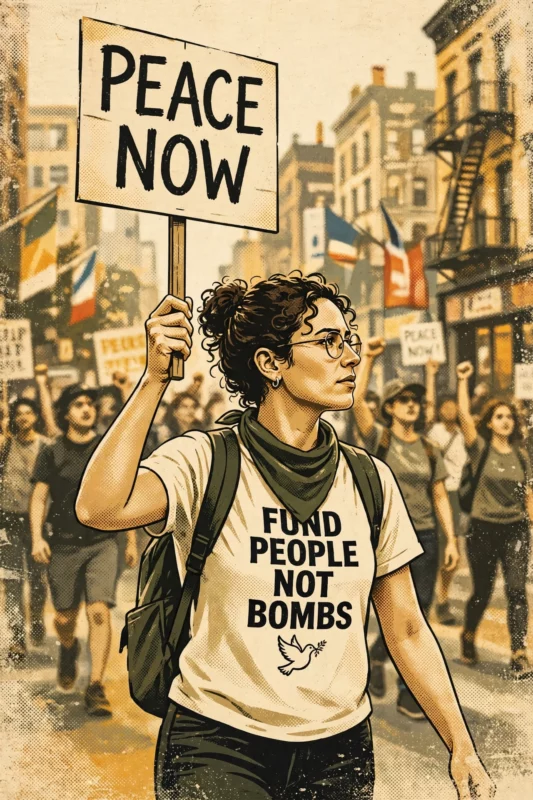
Fund People Not Bombs Shirt: Meaning, Origin, and Why It’s Trending Now
Sep
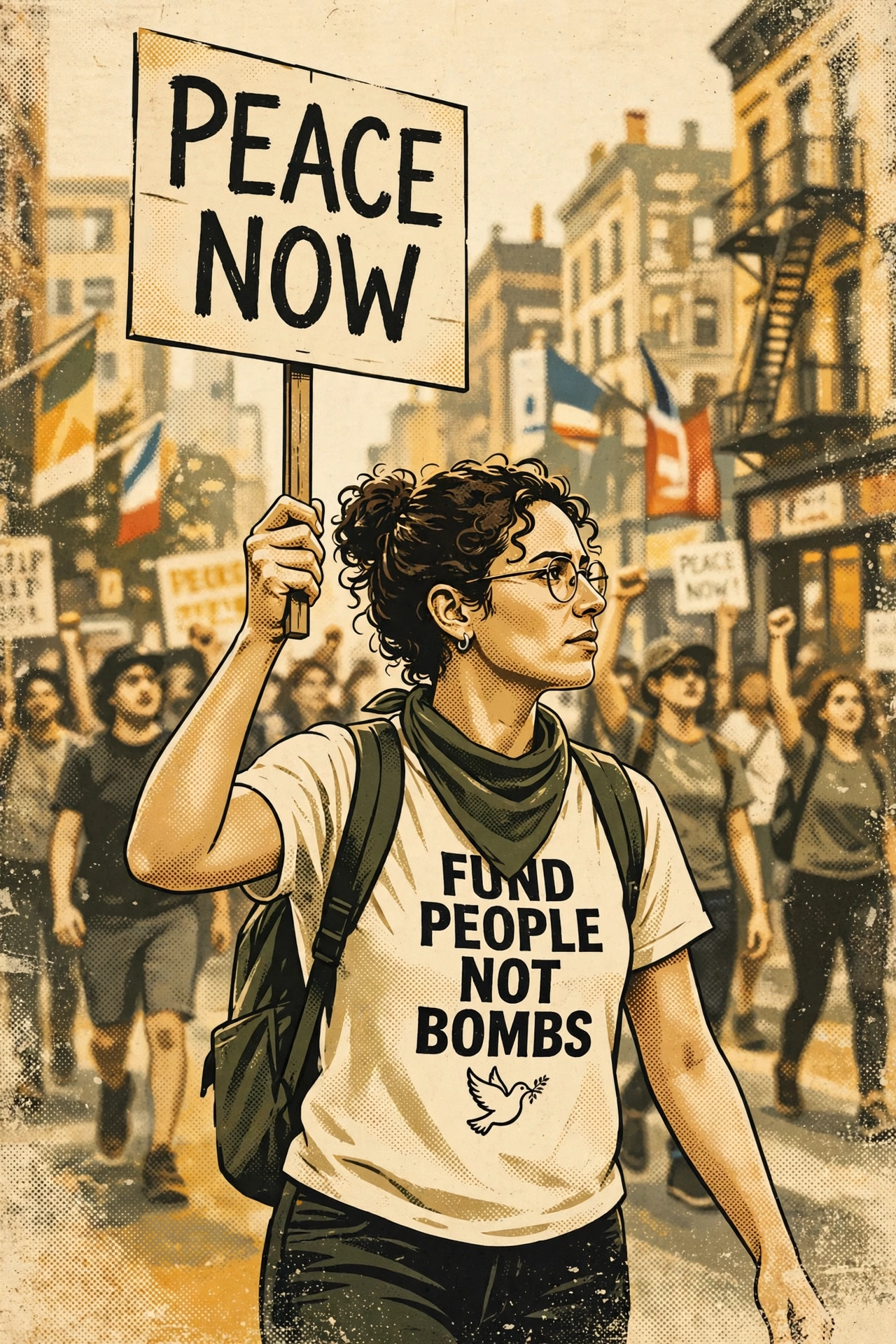
Searches for the “Fund People Not Bombs” shirt exploded this week, with Google flagging the phrase as a Breakout query in the United States. The sudden spike has a clear catalyst: a widely circulated photo of actress Susan Sarandon wearing the shirt while being detained at a protest outside the United Nations. But the slogan itself is older than this week’s headlines — and its meaning goes back decades.
Here’s what the phrase means, where it comes from, and why the shirt is everywhere right now.
What Does “Fund People Not Bombs” Mean?
At its core, the slogan is a critique of government spending priorities. It argues that public money flowing into military budgets, weapons programs, and wars would be better spent on people — healthcare, housing, education, food, and other social needs.
The phrase works because of its simple contrast: people vs. bombs. It reduces a complicated policy debate about defense budgets versus social spending into six words that fit on a chest, a protest sign, or a social media caption. That simplicity is exactly why it keeps reappearing at moments of public anger over military spending.
The slogan is free to use — short phrases and slogans generally aren’t protected by copyright, which is why the words keep showing up on t-shirts, signs, and posters printed by all kinds of different groups and makers.
Why the Shirt Is Trending Now: The UN Protest
The current wave of searches traces back to Thursday, September 24, 2026, when demonstrators gathered outside United Nations headquarters in New York City as Israeli Prime Minister Benjamin Netanyahu addressed the UN General Assembly.
The protest was organized by Jewish Voice for Peace, a Jewish activist group. Roughly 200 people gathered near the UN before the speech, blocking traffic on First Avenue. Chants included “Stop arming Israel, let Gaza live” and “Free, free Palestine,” and some demonstrators carried banners reading “Stop Arming Israel” and “End the Genocide.”
New York police officers detained a number of protesters who refused to leave the intersection — reports ranged from “more than two dozen” to about 100 taken into custody, depending on the outlet. Among those photographed in handcuffs were actress Susan Sarandon, 79, and actress Hannah Einbinder, 31. Photos showed Sarandon wearing a shirt that read “Fund people not bombs.”
The image of a famous actress being led away in a protest tee did what protest photos have done for decades: it turned a slogan into a headline. Within hours, searches for the exact phrase on the shirt — “fund people not bombs shirt” — began surging, with Google labeling it a Breakout in its US trend data for the past four hours. Other public figures were also at the demonstration, including Cynthia Nixon, Elliot Page, Chelsea Manning, Glennon Doyle, and Caleb Hearon, though Nixon’s representatives said she was not arrested or detained.
It is worth being precise about what’s confirmed and what isn’t. The protest, the detentions, and the shirt in the photos are well documented across multiple outlets. Whether Sarandon personally bought the shirt, whether it was made by the organizers, and who first printed the phrase on a tee are not confirmed — and the surge in searches is about the phrase and the photo, not about one specific seller.
A Slogan With Deep Roots in Protest Culture
While this week’s spike is new, the slogan belongs to a long American tradition of budget-priority protest phrases. Its most famous ancestor is “Books not bombs”, which dates back to at least the Vietnam era and was revived during the 2002–2003 protests against the Iraq War, when students marched under the banner to demand education funding instead of invasion spending.
The template is durable: take a human need, contrast it with a weapon, and you have a sign that photographs well and reads instantly. Variations have included “Jobs not wars,” “Schools not prisons,” and “Healthcare not warfare.” “Fund people not bombs” is the same idea sharpened into a demand aimed directly at whoever controls the budget.
The protest t-shirt itself is a genre with its own history. From the “No Nukes” tees of the late 1970s and early 1980s, to the “Silence = Death” shirts of the ACT UP movement, to the pink pussyhat-adjacent wave of slogan tees in the late 2010s, printed shirts have long been the uniform of the demonstration — a way to turn a crowd into a message and a way for people who weren’t there to wear their politics later.
That is exactly the dynamic playing out now: the shirt was first a protest garment, then a news photo, and now a search trend as people look for the meaning behind it — and for the shirt itself.
How to Style a Statement Tee (Without Looking Like You’re Heading to a Rally)
Whatever your politics, the reason statement tees keep selling is that they’re versatile. A few styling notes that work for this kind of shirt:
- Keep the rest simple. A bold slogan does the talking; pair it with straight-leg jeans or chinos and clean sneakers so the shirt is the only loud piece.
- Layer it. Under an open flannel, a denim jacket, or an unzipped hoodie, a slogan tee reads as personal style rather than a placard.
- Fit matters. Slightly relaxed, boxy fits photograph best and echo the vintage protest-tee look. Shrunken or skin-tight fits fight with the message.
- Mind the occasion. A statement shirt is a conversation starter — which is the point, but not at your cousin’s wedding.
The Debate Around It
Not everyone reading the slogan reads it the same way, and any honest explainer should say so. Supporters hear a demand for priorities: fewer weapons, more human welfare. Critics of the protesters’ broader cause hear the phrase as one-sided, noting that the demonstrations this week were specifically aimed at Israel and US military aid. And some people encountering the shirt for the first time are simply curious about the phrase itself, with no stake in the argument.
That layered reaction is part of why the search trend has legs: people are searching for meaning, for the photo, for the shirt, and for the argument — four different intents attached to one six-word slogan.
The Bottom Line
The “Fund People Not Bombs” shirt is trending because a real event put it in front of millions of people: a famous actress, a pair of handcuffs, and a protest outside the UN on September 24, 2026. The phrase itself is older — part of a decades-long family of slogans demanding that public money serve people instead of wars.
Whether you wear the shirt, argue with it, or just wanted to know what it meant, you now know the story behind the search spike. And if history is any guide, this won’t be the last time six words on a t-shirt turn a protest into a headline.
Frequently Asked Questions
What does “Fund People Not Bombs” mean?
It’s a protest slogan arguing that government spending should prioritize people’s needs — healthcare, housing, education — over military spending and weapons.
Why is the “Fund People Not Bombs” shirt trending?
Actress Susan Sarandon was photographed wearing the shirt while being detained at a September 24, 2026 protest outside the UN during Benjamin Netanyahu’s address to the General Assembly. The photos drove a surge in searches for the shirt.
Who organized the protest?
The demonstration was organized by Jewish Voice for Peace, a Jewish activist group, and drew roughly 200 people near UN headquarters in New York.
Where can I buy a “Fund People Not Bombs” shirt?
The phrase is short and free to use, so versions are printed by many independent sellers and print-on-demand shops. Since the surge is new, listings are still appearing — searching the exact phrase on major marketplaces and independent tee sites will surface current options.
Is “Fund People Not Bombs” copyrighted?
Short phrases and slogans generally can’t be copyrighted, which is why the same wording appears from many different printers and groups. (This is general information, not legal advice.)
What happened at the UN protest?
Demonstrators gathered outside UN headquarters in New York on September 24, 2026, during Netanyahu’s UNGA speech. Police detained dozens of protesters who blocked the intersection, including Susan Sarandon and Hannah Einbinder.
