
Blog, Style and Tips, T-Shirt Guides
T-Shirt Fabric Guide: Cotton vs Polyester vs Tri-Blend
Mar
Not All Fabrics Are Created Equal — Here’s Why It Matters
Ever pulled a brand-new t-shirt out of the dryer and realized it’s now two sizes smaller? Or worn a shirt on a hot day that clung to you like plastic wrap? That’s what happens when you don’t pay attention to fabric composition.
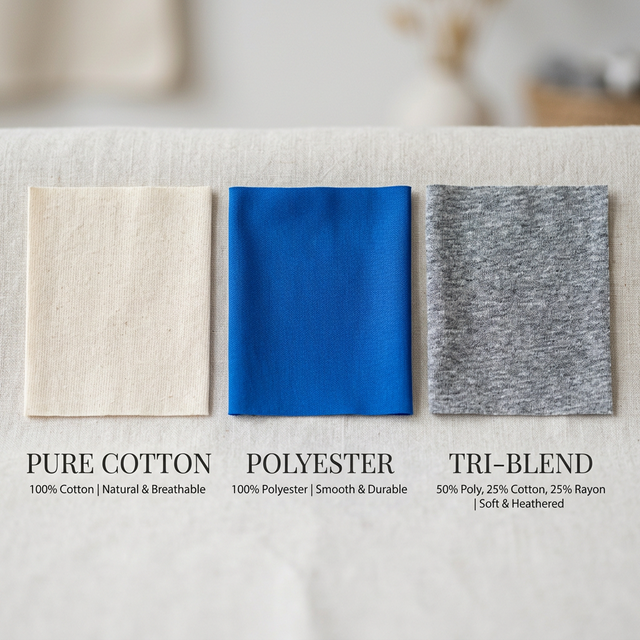
The three most common t-shirt fabrics — cotton, polyester, and tri-blend — each have wildly different properties when it comes to comfort, durability, shrinkage, and print quality. Understanding these differences is the key to buying shirts you’ll actually love wearing for years.
Whether you’re shopping for everyday basics, performance wear, or the perfect canvas for graphic prints, this guide will help you make smarter choices every time you add a tee to your cart.
100% Cotton: The OG T-Shirt Fabric
Cotton has been the king of t-shirt materials for over a century, and for good reason. It’s natural, breathable, and feels soft against the skin from day one.
Pros:
- Breathability — cotton fibers allow air to circulate, keeping you cool in warm weather
- Softness — gets softer with every wash (ringspun cotton is even softer from the start)
- Print quality — absorbs ink deeply, making screen-printed and DTG designs look vibrant and long-lasting
- Hypoallergenic — naturally gentle on sensitive skin
- Biodegradable — the eco-friendly choice for conscious consumers
Cons:
- Shrinkage — can shrink 3-5% after the first hot wash/dry cycle
- Wrinkles easily — cotton creases more than synthetic blends
- Absorbs moisture — great for light sweating, but cotton holds water and can feel heavy during intense exercise
- Heavier weight — typically thicker and heavier than blended alternatives
Best For:
Everyday casual wear, graphic t-shirts, lounging, and anyone who prioritizes comfort and natural fibers over performance features.
Types of Cotton to Know:
- Ringspun cotton — fibers are tightly twisted for a smoother, softer feel (used in premium brands)
- Combed cotton — short fibers and impurities are combed out, resulting in an even softer texture
- Organic cotton — grown without synthetic pesticides or fertilizers (eco-premium option)
- Pima/Supima cotton — extra-long staple fibers for the softest, most durable cotton available
100% Polyester: The Performance Powerhouse
Polyester is a synthetic fabric made from petroleum-based polymers. It dominates the athletic and activewear market for its moisture-wicking superpowers.
Pros:
- Moisture-wicking — pulls sweat away from the body and dries incredibly fast
- Wrinkle-resistant — looks crisp right out of the suitcase
- Color retention — sublimation prints on polyester are virtually permanent and vibrant
- Durability — resists stretching, shrinking, and fading
- Lightweight — feels lighter than cotton at the same thickness
Cons:
- Less breathable — traps heat more than natural fibers, can feel plasticky in still air
- Odor retention — synthetic fibers hold onto body odor more than cotton
- Static cling — attracts static electricity, especially in dry weather
- Not eco-friendly — made from petroleum, not biodegradable, sheds microplastics when washed
Best For:
Workouts, sports jerseys, outdoor activities, all-over print (sublimation) designs, and anyone who needs quick-dry performance.
Tri-Blend: The Best of Both Worlds
Tri-blend combines three fabrics — typically 50% polyester, 25% cotton, and 25% rayon — to create a t-shirt that is arguably the most comfortable thing you’ll ever wear.
Pros:
- Ultra-soft — rayon adds a silky drape that makes the shirt feel premium from the first wear
- Perfect weight — lighter than 100% cotton but more substantial than polyester
- Vintage look — has a natural heathered texture that gives shirts a lived-in, retro vibe
- Minimal shrinkage — the polyester component prevents excessive shrinking
- Breathable + moisture-wicking — gets the breathability of cotton and the wicking of polyester
Cons:
- More expensive — typically costs 30-50% more than 100% cotton options
- Less vibrant prints — the heathered texture can slightly mute bold graphics
- More delicate — requires gentler washing to maintain the soft texture
- Limited availability — not as widely available as pure cotton or polyester options
Best For:
Premium casual wear, fashion-forward consumers who value comfort and aesthetics, vintage-style designs, and anyone willing to pay a bit more for the ultimate everyday tee.
Head-to-Head Comparison
| Feature | Cotton | Polyester | Tri-Blend |
|---|---|---|---|
| Softness | ⭐⭐⭐⭐ | ⭐⭐ | ⭐⭐⭐⭐⭐ |
| Breathability | ⭐⭐⭐⭐⭐ | ⭐⭐⭐ | ⭐⭐⭐⭐ |
| Moisture-wicking | ⭐⭐ | ⭐⭐⭐⭐⭐ | ⭐⭐⭐⭐ |
| Durability | ⭐⭐⭐ | ⭐⭐⭐⭐⭐ | ⭐⭐⭐ |
| Print quality | ⭐⭐⭐⭐⭐ | ⭐⭐⭐⭐ (sublimation) | ⭐⭐⭐ |
| Shrinkage risk | High | Very low | Low |
| Price range | $ | $$ | $$$ |
How to Choose the Right Fabric for Your Needs
Choose Cotton If:
- You want the best canvas for bold graphic prints
- Breathability and natural feel are your top priorities
- You’re buying everyday casual tees on a budget
- You have sensitive skin or prefer eco-friendly materials
Choose Polyester If:
- You need workout or performance wear
- You want all-over sublimation prints with vivid colors
- You travel frequently and need wrinkle-free clothes
- Durability and easy care are non-negotiable
Choose Tri-Blend If:
- Comfort is king and you’re willing to pay a premium
- You love the vintage, heathered aesthetic
- You want a versatile tee that works from couch to coffee shop
- You appreciate the balance between natural and synthetic fibers
The Bottom Line
There’s no single “best” t-shirt fabric — it depends entirely on how and where you’ll wear it. Cotton remains the gold standard for everyday comfort and graphic tees. Polyester dominates active and performance wear. And tri-blend is the premium choice for anyone who wants the ultimate in softness.
The smartest move? Have all three in your rotation. That way, you’re always reaching for the right fabric for the right moment.
Browse our collection of premium graphic t-shirts at Q-Finder — crafted on quality fabrics, printed in the USA, and designed to turn heads. 🇺🇸
Frequently Asked Questions
Does cotton shrink more than polyester?
Yes. 100% cotton t-shirts can shrink 3-5% after the first hot wash and dry cycle. Polyester is highly resistant to shrinking. To minimize cotton shrinkage, wash in cold water and air dry or tumble dry on low heat.
What is the most comfortable t-shirt fabric?
Most people find tri-blend (50% polyester, 25% cotton, 25% rayon) to be the most comfortable option. The rayon adds a silky drape, while the cotton and polyester provide structure and durability. It’s the premium choice for everyday comfort.
Which fabric is best for screen-printed t-shirts?
100% cotton, especially ringspun cotton, provides the best results for screen printing and DTG (direct-to-garment) printing. The natural fibers absorb ink deeply, producing vibrant and long-lasting designs. For all-over prints, polyester with sublimation printing is the superior choice.
