
Style & Tips
How to Unshrink a Sweatshirt: The Easy Rescue Guide
Mar
Your Favorite Sweatshirt Shrunk — Don’t Panic, It’s Fixable
We’ve all been there. You throw your beloved sweatshirt into the dryer “just to fluff it,” and twenty minutes later you pull out a garment that would fit a medium-sized child. Your $60 crewneck is now a crop top. Your oversized hoodie is now a fitted vest. The panic is real.
But here’s the good news: you can unshrink a sweatshirt. The fibers aren’t destroyed — they’ve just been forced into a compressed state by heat and agitation. With the right technique, you can coax those fibers back to their original relaxed position. Think of it as physical therapy for cotton.
Here are 3 proven methods to rescue your shrunken sweatshirt — from the gentle baby shampoo soak to the steam stretch technique. No PhD in textile science required.
Why Do Sweatshirts Shrink in the First Place?
Understanding the enemy is the first step to defeating it. Sweatshirts shrink because of three factors working together:
- Heat — The number one culprit. Hot water and high-heat dryer cycles cause cotton and cotton-blend fibers to contract and tighten. The higher the temperature, the more the fibers compress
- Agitation — The tumbling motion in both washers and dryers physically pushes fibers closer together. Combined with heat, agitation essentially felt-izes the fabric, making it denser and smaller
- Moisture + Heat Combo — Wet cotton fibers are more susceptible to heat damage. When a wet sweatshirt meets a hot dryer, the fibers lock into their shrunken position as they rapidly dry
The good news? Since the fibers aren’t actually broken — just compressed — we can reverse the process by relaxing them back to their original state.
Method 1: The Baby Shampoo Soak (Best for Cotton Sweatshirts)
This is the most widely recommended and gentle method. The conditioner or baby shampoo acts as a fiber relaxant, softening the compressed cotton fibers so they can be stretched back to size.
What You’ll Need:
- A clean sink, basin, or bathtub
- Lukewarm water (NOT hot — you caused this problem with heat, don’t add more)
- 1 tablespoon of baby shampoo, hair conditioner, or gentle fabric softener
- 2 large, dry towels
- A flat surface for drying
Step-by-Step Instructions:
Step 1: Prepare the Solution
Fill your basin with enough lukewarm water to fully submerge the sweatshirt. Add 1 tablespoon of baby shampoo or hair conditioner. Swirl the water until it feels silky. The conditioner’s ingredients (silicones and surfactants) will penetrate the fiber structure and loosen the bonds that are holding the fibers in their shrunken state.
Step 2: Soak for 30 Minutes
Submerge the sweatshirt completely. Gently press it down to ensure every fiber absorbs the solution. Set a timer for 30 minutes. Don’t skip this step — the fibers need time to fully relax. Think of it like a spa day for your sweatshirt.
Step 3: Drain Without Wringing
Remove the sweatshirt from the water. Do NOT wring it — wringing pushes fibers together and can cause additional shrinkage. Instead, gently press the sweatshirt against the side of the basin to remove excess water. It should be damp but not dripping.
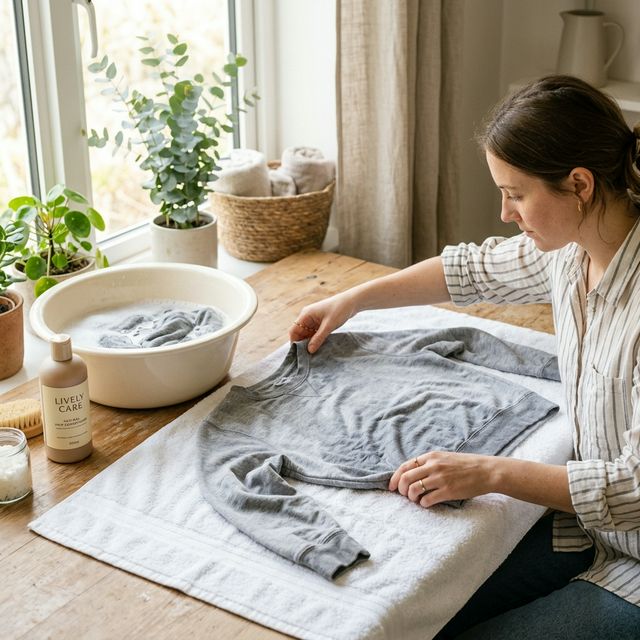
Step 4: Roll in a Towel
Lay a large, dry towel flat on a surface. Place the damp sweatshirt on top. Roll the towel up with the sweatshirt inside — like a Swiss roll. Press down firmly to absorb excess moisture. Unroll, and repeat with the second dry towel if the sweatshirt is still very wet.
Step 5: Stretch to Shape
Lay the sweatshirt flat on a clean, dry surface. Now, gently pull and stretch the fabric in all directions — width, length, sleeves. Use both hands and apply steady, even pressure. If you have a similar-sized shirt that fits correctly, place it on top as a template to guide your stretching.
Step 6: Air Dry Flat
Leave the sweatshirt laid flat to air dry completely. Do NOT hang it — gravity will stretch it unevenly. Place it on a drying rack or a clean towel on a table. This may take 12-24 hours depending on humidity. Patience is your friend here.
Method 2: The Steam Stretch (Best for Slightly Shrunken Sweatshirts)
If your sweatshirt only shrunk a little — maybe half a size — the steam method is faster and less involved than a full soak. Steam relaxes fibers without fully saturating the garment.
What You’ll Need:
- A garment steamer OR an iron with a steam function
- A flat surface covered with a towel
- Two hands with decent grip strength
Step-by-Step Instructions:
Step 1: Lay the sweatshirt flat on a toweled surface.
Step 2: Hold the steamer 2-3 inches above the fabric (never press a hot iron directly onto a sweatshirt — you’ll scorch it and add ironing damage to your shrinkage problem). Apply steam evenly across the entire garment.
Step 3: While the fabric is warm and damp from the steam, immediately begin stretching it with your hands. Work section by section: first the body, then each sleeve, then the hem. Gentle, sustained pulls work better than aggressive yanking.
Step 4: Hold each stretched section in place for 10-15 seconds before moving to the next area. You can use heavy books or clean weights on the edges to maintain the stretch while you work on other sections.
Step 5: Allow the sweatshirt to cool and dry completely in its stretched position. The fibers will set in the new shape as they cool. Browse stretch-resistant hoodies at Q-Finder.
Method 3: The Vinegar Solution (Best for Stubborn Shrinkage)
For sweatshirts that have been through multiple hot cycles and are seriously compacted, white vinegar provides extra fiber-relaxing power. The acetic acid in vinegar helps break down the bonds between compressed fibers more aggressively than baby shampoo alone.
What You’ll Need:
- A large basin or bathtub
- Lukewarm water
- 1 cup of white vinegar
- 2 tablespoons of hair conditioner (optional, for extra softening)
- Large towels for drying
Step-by-Step Instructions:
Step 1: Mix 1 cup of white vinegar with lukewarm water in your basin. Add conditioner if desired. The vinegar smell will dissipate as the garment dries — promise.
Step 2: Submerge the sweatshirt and soak for 25-30 minutes. Vinegar needs time to penetrate and loosen the fiber bonds.
Step 3: Follow the same drain, roll, stretch, and air-dry process from Method 1. The vinegar-treated fibers will be more pliable and responsive to stretching.
Pro tip: You may need to repeat this method 2-3 times for severely shrunken garments. Each cycle relaxes the fibers a little more. Don’t expect perfection on the first try for a sweatshirt that’s been through five hot dryer cycles.
Prevention: How to Stop Sweatshirts from Shrinking
The best unshrinking technique is not needing one. Here’s how to keep your sweatshirts at their original size:
- Always wash in cold water — Cold water cleans effectively without triggering fiber contraction. 90% of washing machine energy goes toward heating water anyway, so cold washing saves money too
- Air dry whenever possible — Hanging or laying flat to dry eliminates all heat-related shrinkage. This is the single most effective prevention method
- Use low heat if you must use a dryer — Low or medium heat with a shorter cycle reduces shrinkage significantly. Remove the sweatshirt while still slightly damp and lay flat to finish drying
- Read the care label — It’s there for a reason. If it says “line dry,” believe it
- Wash inside out — This protects the outer surface and any printed designs from heat damage and friction
- Use a mesh laundry bag — Reduces agitation during the wash cycle, which contributes to shrinkage
Which Fabrics Shrink the Most?
Not all sweatshirt fabrics are equally vulnerable to shrinkage:
- 100% Cotton — High shrinkage risk (can shrink 3-5% per wash with heat). Most responsive to unshrinking methods
- Cotton/Polyester Blend (80/20 or 60/40) — Moderate shrinkage risk. The polyester provides some shrink resistance. Most Q-Finder hoodies and sweatshirts use quality blends for this reason
- 100% Polyester — Very low shrinkage risk but can still shrink at extremely high temperatures
- Fleece-Lined — The inner fleece layer can shrink independently from the outer shell, causing puckering. Handle with extra care
- French Terry — Similar to cotton; moderate shrinkage risk. Respond well to the soak-and-stretch method
Save Your Sweatshirt, Save Your Sanity
A shrunken sweatshirt isn’t a death sentence — it’s just a temporarily compressed garment waiting to be rescued. With baby shampoo, patience, and gentle stretching, you can bring most shrunken sweatshirts back to within 90-95% of their original size. The key is acting quickly (before you wash and dry it again in frustration) and being gentle throughout the process.
If you’re shopping for your next favorite sweatshirt or hoodie, Q-Finder offers premium quality garments in shrink-resistant fabrics that are designed to maintain their shape wash after wash. Every piece is crafted with quality materials and printed in the USA.
👉 Shop Hoodies & Sweatshirts at Q-Finder
Frequently Asked Questions
Can you really unshrink a sweatshirt?
Yes, in most cases you can restore a shrunken sweatshirt to 90-95% of its original size. The baby shampoo soak method works best for cotton and cotton-blend sweatshirts by relaxing compressed fibers so they can be manually stretched back to shape. Results depend on how severely the garment shrunk and the fabric composition — 100% cotton responds best to unshrinking techniques.
Does the baby shampoo method actually work?
Baby shampoo and hair conditioner contain silicones and surfactants that act as fiber relaxants, lubricating the compressed cotton fibers so they can slide back to their original positions when stretched. This isn’t a myth — textile experts and garment care professionals recommend this method. The key is giving the fibers enough soak time (30 minutes minimum) and stretching gently but firmly.
How do I prevent my sweatshirt from shrinking again?
The most effective prevention is simple: wash in cold water and air dry. Heat is the primary cause of fabric shrinkage. If you must use a dryer, use the lowest heat setting and remove the sweatshirt while still slightly damp. Also, check the care label — “tumble dry low” and “line dry” instructions exist because the manufacturer tested what their fabric can handle.
